Latest Posts

The Stuff of Dreams, a Dedication to Terrence McNally

The company of THE STENDHAL SYNDROME on Opening Night (2004)

In 2002, Primary Stages began a new chapter in our journey as an Off-Broadway company.  We had outgrown our longtime stage on West 45th Street and we were on our way to our new home as the resident company at the freshly built 59E59 Theaters.  In preparation for our premiere season there, we were searching for a new play that would grab the attention of the theater world. We immediately thought of Terrence McNally, one of America’s preeminent playwrights and an artist firmly committed to the Off-Broadway movement.

I sat down to lunch with Terrence at his favorite Knickerbocker restaurant and he began to speak about his idea of expanding his existing short play, Prelude and Leibestod, and turning it into a full evening of theater. He soon gave me the script and said, “Let me know what you think.”  We read it and it quickly became clear that this would be the perfect work to open this new theater complex.  When I told Terrence of our desire to produce a production of this yet-to-be-finished work, he exclaimed, “You’ve just made my entire year!”  In 2004, Primary Stages opened The Stendhal Syndrome at 59E59 Theaters with Isabella Rossellini and Richard Thomas in the leading roles.  We soon followed that up with the world premiere of Terrence’s Dedication or The Stuff of Dreams with Nathan Lane and Marian Seldes.

Terrence as a playwright was an innovator and a master of the form.  He sculpted his plays from his vast, eclectic knowledge, his love of theater, opera and classical music, and his unstinting commitment to revolutions in sexual identity and politics.  The spirit of generosity in his work always left his audiences awed, inspired and profoundly transformed by his passion. The creation of theater for Terrence was the stuff of dreams;  a magic crucible for change, inspiration and a deeper understanding of oneself.

I recently began talking with Terrence about writing another play for Primary Stages, especially since we are soon returning to 59E59 Theaters.  He was thrilled with the idea and wanted to begin work once his health improved.  “I have three ideas for my next play,” he exclaimed.  “But I’ve just got to get a chance to write them down.”   

Many years ago when Casey Childs, Founder, first began honoring major theater creators for their commitment to the art of playwriting at Primary Stages, Terrence McNally was the first person he reached out to. We still honor him, for his love of theater and theater artists, for the vast library of timeless new works he left us, for his profound legacy.  

We are grateful and we are forever changed.

Andrew Leynse
Artistic Director

In October 2017, Casey Childs sat down to talk with Terrence McNally as part of Off-Center, the Primary Stages Off-Broadway Oral History Project. Click here to see the highlights and here to view the full interview.
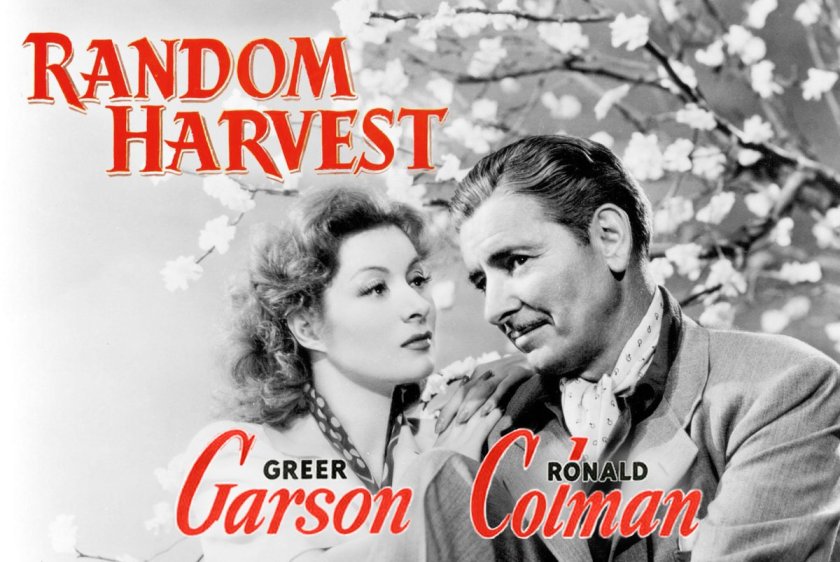
Greer Carson and Ronald Colman in Random Harvest

Top Ten Tearjerkers: Random Harvest

How have we nearly sped through February? We’re back with the next installment in our Top Ten Tearjerkers series, this time with a particularly poignant pick: 1942’s Random Harvest.

“Ronald Colman and Greer Garson had two of the most beautiful speaking voices in the movies. I have a great fondness for both of them. I suppose Greer Garson is something of an acquired taste. She has a marvelous, expansive womanliness that is redolent of the great actresses of the early Twentieth Century. I’ve always imagined her playing Shaw’s “Candida.”

This movie is based on a novel by James Hilton and the plot just keeps going. It’s a wonderful story. Colman is a British aristocrat who suffers from amnesia after being wounded in WWI. He escapes from an insane asylum and begins a new life with a lovely music hall performer played by Greer Garson. On his first trip away from her, he’s hit by a taxi and suddenly has total recall of his previous life… but no longer remembers Greer! I don’t want to give away any more, but it’s so romantic and heartbreaking. But with a rare happy ending!

There’s an achingly sensitive performance by a young actress, Susan Peters, who was nominated for an Oscar for this movie. Shortly afterwards, she was in a hunting accident and became paralyzed below the waist. She died a few years later. Her presence haunts the film.

Part of my fondness for this movie is that I remember watching it as a child with my father, who loved romantic tearjerkers. He was one of those resolutely heterosexual men who had somewhat recherché tastes. There was a period after my mother died, when we had a live-in housekeeper. I had to give up my bedroom and since my father was at work all day, and out all night (he cut quite a swath through “Parents Without Partners”). Twin beds were moved into my parent’s room and that’s where I slept. My father would come home from boffing a stewardess or a brittle divorcee and would turn on the Late Show and I’d be wide awake. Who could sleep through “Random Harvest?” He was a completely permissive parent, and this was a golden time for me to spend with a charismatic father who seemed more like a fun and affectionate visiting celebrity. Random Harvest was his favorite movie.”

Charles Busch

Please click above if you would like to hear this blog narrated.

Top Ten Tearjerkers: The Sin of Madelon Claudet

If any one film can be credited as the most prominent influence on Charles’ current production of The Confession of Lily Dare, it’s The Sin of Madelon Claudet (1931). Lily’s character arc; each besotted glance, throaty growl, and afflicted crumple of the body follows in Helen Hayes’ steps.

“Okay. This is not one of my faaaaavorite movies, but I enjoy it a lot. I list it here because it’s one of the films that most inspired my new play The Confession of Lily Dare. It’s mainly notable for a lovely and insightful performance by Helen Hayes in the title role. Most people are only familiar with Helen Hayes from her performances on television and film in her old age such as Airport. Madelon Claudet was essentially her film debut. She won her first Oscar for this performance and had a brief successful film career as a leading lady before returning to her first love, the theatre, and being dubbed the “First Lady of the American Stage.”

The plot is something of a riff on Madame X, where a young woman is forced to give up her baby and years later protects her grown child from her sinful past by her anonymity. Hayes goes through many transformations as Madelon Claudet; innocent girl, elegant kept woman, alcoholic prostitute and aged homeless derelict. She plays each chapter truthfully and beautifully. She deserved that Academy Award.

The first screening for the MGM executives went very badly and the producer Irving Thalberg had Helen Hayes’ husband, the famous Broadway playwright, Charles MacArthur, rewrite scenes. A key moment was added early in the film, where Hayes having given birth to an illegitimate baby, lies in bed in torment, wishing the child had been born dead. The baby is placed in her arms and there is an exquisite lingering close up where her expression changes from bitter rejection of the infant to deep maternal love. This was the scene that evidently saved the movie and nabbed Hayes the Oscar.”

Charles Busch

Top Ten Tearjerkers: Now, Voyager

The untold want by life and land ne'er granted,
Now voyager sail thou forth to seek and find.

Walt Whitman, "The Untold Want"

The 1942 film Now, Voyager is regarded as one of the most beloved love stories in American film history. Directed by Irving Rapper and starring Bette Davis and Paul Henreid (with an Oscar-winning score by Max Steiner), it was selected for preservation in our National Film Registry by the Library of Congress in 2007.

“Bette Davis was the Queen of the Warner Brothers lot in the late thirties and forties and in her golden period she starred in a number of my favorite “women’s films.” My favorite is Now Voyager. So much happens to her in barely two hours. She plays Charlotte Vale, the neurotic spinster daughter of a Boston matriarch (wonderfully played by the always brilliant Gladys Cooper). She recovers at a sanitarium from a nervous breakdown and undergoes a fabulous transformation into the epitome of forties chic and becomes the most popular woman on a cruise to South America. In fact, I always use as shorthand the phrase, “It’s Charlotte Vale after the cruise,” whether discussing a casting director’s weight loss or my sister’s cat turning surprisingly social. Charlotte engages in a clandestine romance with a married architect (Paul Henreid) and finds herself mentoring his deeply troubled teenage daughter.

Davis, with her no-nonsense New England manner dares you not to find every step of her progress plausible. Both the most theatrical of the great pantheon of classic Hollywood actresses, she is also, in my opinion, the most profoundly insightful. My favorite part of her performance is the section of the film where she has been made stylish and glamorous, but inside is still the bitter, unloved, damaged daughter. She dares to be unlikable, as people can be when they are desperately unhappy. There are scenes towards the end of the movie that could leave the most hard-hearted reaching for a Kleenex.”

Charles Busch

Top Ten Tearjerkers: Waterloo Bridge

Come 1940 we meet a very different Robert Taylor post-Camille, this time co-starring with Vivien Leigh in the remake of the 1931 film of the same name.*

Vivien Leigh! I love Vivien Leigh. I might even say [she’s] my favorite actress. This was her follow up film to Gone With The Wind. It was based on a stage play by Robert E. Sherwood and had already been filmed once in 1931 with Mae Clarke. This new MGM version is more glossy and romantic than the original, but I feel adds greater dimension to the central role of Myra, a young ballet dancer, who falls in love with Roy, a British officer (Robert Taylor) in WWI London. Let’s face it. Mae Clarke was fine but I wouldn’t want to see her play Blanche DuBois. Roy’s mistakenly listed as killed in action. Myra’s dismissed from the ballet company by a terrifying Maria Ouspenskaya. She is one of the most eccentric actresses ever to grace the screen. Anyway, hunger, poverty and despair lead Myra to turn to prostitution. It turns out Robert Taylor is alive and, unaware of her new life, brings her home to his noble family’s lavish estate.

It’s all beautifully played, particularly by Vivien Leigh and also by Virginia Field as her best friend Kitty. I was inspired by that sisterly relationship when writing my play The Lady in Question. In most of my plays, Julie Halston and I have played variations of Myra and Kitty. Vivien Leigh’s approach to her street walking scenes is remarkably unsentimental. The script establishes in her from the beginning an innately fatalistic attitude. She avoids all clichés as she accepts her first proposition on a foggy Waterloo Bridge or flirtatiously welcoming returning soldiers in the train station. Her performance elevates the entire film and is definitely worth seeing.”

Charles Busch

*At the time of the 1931 film’s initial release, it was censored for its portrayal of prostitution; many plot details in the 1940 film were dramatically changed and “sanitized”.

Top Ten Tearjerkers: Camille

First in our series: Camille (1936) with the inimitable Greta Garbo.

“If you have never seen a Greta Garbo film, and want to know what all the hubbub is about, check out this sumptuous adaptation of the classic Dumas tale about a tragic 19th century courtesan and her self-sacrifice. Directed impeccably by George Cukor, it’s 1930’s MGM at it’s most opulent and fatalistically sentimental or sentimentally fatalistic. Garbo, who can at times be frustratingly sonombulistic and mannered is in this film energized and remarkably contemporary. She has a lightness and wit and imbues a sense of irony in every scene. Everything that Garbo is noted for, her androgynous nature, her erotic dominance over her male co-star (in this case, an impossibly beautiful young Robert Taylor), her enigmatic glamour is all expressed here.

I’ll go as far as to say that it’s one of the greatest film performances in classic Hollywood cinema. Garbo was nominated for a Oscar for her role as Marguerite Gautier and really should have won. The film succeeds on so many levels but as a tragic love story it’s incredibly moving. If you’ve never seen Garbo in Camille, you have a real treat in store.”

Charles Busch

An Interview with Andrew Willis-Woodward

Andrew Willis-Woodward is a New York-based actor and director, as well as a founding member of Red Caravan. He is currently assistant directing on our production of Charles Busch’s The Confession of Lily Dare, which is all the more fulfilling given his history with Primary Stages as an artist at our Einhorn School of Performing Arts! Andrew recently took a moment out of his hectic tech schedule for Lily Dare to speak with us on how ESPA has shaped his work as a director.

When did you start taking classes with Primary Stages ESPA and how did you hear about us?

My very first ESPA class was a directing intensive focused on pre-production, taught by the incredible May Adrales. I was recommended by a friend; he’d gone to grad school with May and he told me in no uncertain terms to go take her class. I LOVED it.

What was one of your favorite experiences at Primary Stages ESPA?

At the end of Daniel Talbott’s Site Specific Directing class, we raised money for the whole class to take a trip upstate. We all spent a weekend together in this very magical and very haunted little cabin. We directed Sarah Kane scenes up there. It was bonkers. And amazing. I remember feeling utterly terrified going into that weekend and then utterly euphoric by the end. 

How did being a artist at ESPA shape your current theatrical career?

In so many ways. In terms of craft, my notes from those classes are still my bible. In terms of experience, most of the first real directing I ever did was in ESPA programs like Detention and Drills. And then just in terms of people… I can’t say enough. I made lifelong friends at ESPA. ESPA actors became the actors I’d reach out to again and again, and ESPA writers became regular collaborators. The community is incredible.

What has your experience being a part of The Confession of Lily Dare been like?

Massively educational, and truly an all around delight. The level of expertise in the room is astronomical, so getting to be a part of that is beyond cool. On top of that, everyone has been so kind. And also hilarious. (This cast is funny. Come see the show, you’ll see what I mean.)

Most of the Lily Dare team has worked together before, but I was brand new to everyone, including Carl, our director. He’s been enormously generous about welcoming me into the process and including me in the artistic development of the show. I couldn’t be more grateful for that, and for this entire experience.

What would your advice be to other ESPA artists? 

Take really good notes. Do as many Detentions / Drills / readings as you can. Get to know everyone you work with, and if you connect with someone, follow up! Go out for that coffee or that drink. Invest in the relationships you make here; you might be finding your future art-partners!

Anything else you’d like to share about Primary Stages or ESPA in general?

The Primary Stages ESPA staff are some of the loveliest, hardest working people on the planet. Love them. Appreciate them. Bring them presents. 

Shots from Daniel Talbott’s Site Specific Directing Class

Charles Busch’s Top Ten Tearjerkers

Happy New Year and welcome to the new home of the Primary Stages blog! Whether you’re a big believer in resolutions, intentions, manifestations, or what-have-you, we can all agree that there’s something immensely satisfying in starting fresh in a new year, let alone a new decade! We cannot wait to continue growing this as a hub for all things Primary Stages, from interviews with our expansive family of artists to staff recommendations for good eats around the theater, and everything in between. This is for you—our community—and we cannot wait to get started. Happy reading!

In anticipation of our first production of 2020 and continuing the momentum of our 35th Anniversary season, we are thrilled to welcome back beloved Primary Stages family member Charles Busch! You may remember Charles from past Primary Stages productions of The Tribute ArtistOlive and the Bitter Herbs, and You Should Be So Lucky. This month, Charles makes his triumphant return to the stage in his newest play, The Confession of Lily Dare. This comic melodrama celebrates the gauzy “confession film” tearjerkers of early 1930s pre-code cinema.

Over the course of the next few weeks, we will release new additions to the Top Ten Tearjerkers with Charles Busch, in which Charles describes some of his favorite confession films and how they have inspired his work on The Confession of Lily Dare. Stay tuned for deeper insight into Charles’ artistic inspiration (and more than a few laughs).